
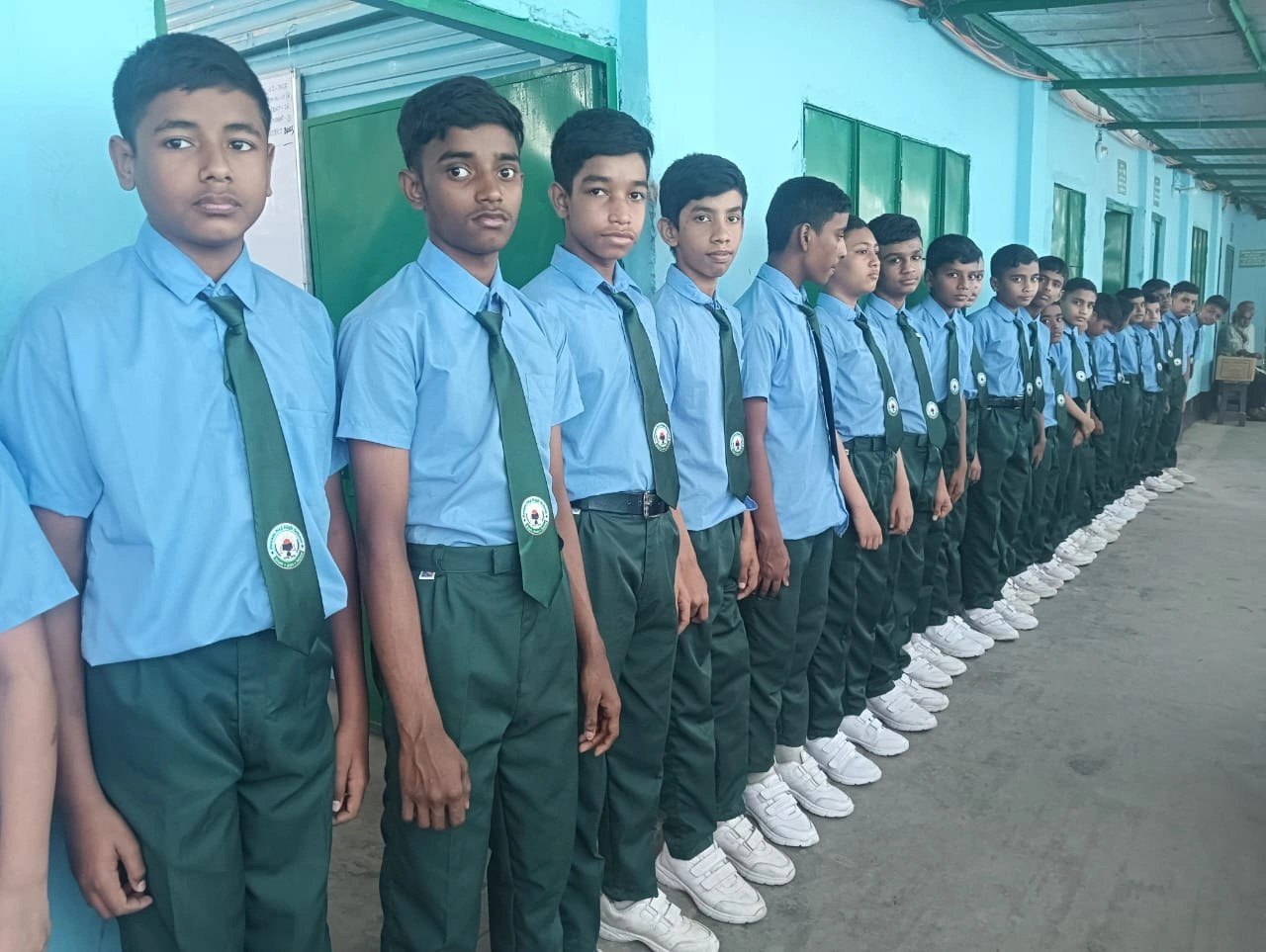
Vision 2040
Breaking barriers, building futures
A multi-year strategy to reach the tipping point on full education, empowerment and integration of Bangladesh's Urdu-speaking camp communities.
The context
Fifty-five years of relief without changing the equation
250,000 people have been in camps since 1971 — without the underlying choice ever changing: leaving still means giving up a known network for an unknown one.
People are not staying because camp life is comfortable. They stay because leaving means an unconditional loss — and no messaging campaign fixes a missing bridge.
The vision
Not charity. Not temporary relief.
Dignity restored and barriers removed.
- ✓No family confined to camp life
- ✓Full social and economic integration
- ✓Dignity, opportunity and stability
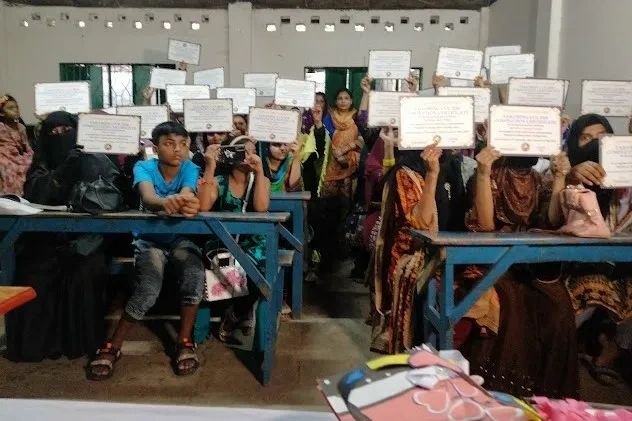 Graduation day
The strategic model
Why "tipping point", specifically
Research on social change shows that once enough people in a group visibly do something new — usually 20–25% — it becomes the new normal for everyone else. Below that level, the old way stays the default. Above it, change spreads on its own.
The implication
Spreading five years of effort thinly across all 116 camps feels fair, but it will not change anything. Focusing resources on a smaller group of camps until they visibly cross that point — then letting the change spread on its own — is what makes Years 6–15 possible.
The anchor-camp concentration model
Choose the anchors
15–20 anchor camps across the 9 districts in Year 1, picked because they are ready — existing NGO presence, strong community leaders — and representative, so what works there can be applied elsewhere.
Deliver the full model there first
Education, skills training, legal help, transition funding and the Youth Corps, all in the anchor camps — aiming to reach the 20–25% tipping point by Year 4–5.
Foundational services everywhere
Early and primary education plus legal document support in all 116 camps from Year 1, so every family is moving forward even before their camp becomes an anchor.
Use results as proof to expand
Anchor-camp results justify expansion to more camps in Years 4–5, then to the whole network in Phase 2 (Years 6–10).
Scaling to 250,000 people
Making scale replicable, not reinvented per camp
A standard playbook
Curriculum, teacher training, vocational centre setup and legal-clinic steps — so each new camp follows a proven model instead of starting from scratch.
One coalition, one standard
Partner organisations each manage specific camps or districts, but all follow the same standards and report to one shared dashboard — instead of running separate, incompatible programs.
One shared data system
A unique ID for every family, usable across all camps and partners — so a family's progress is recorded once, not repeated by every NGO it works with.
The five-year path
Year by year to the tipping point
Household census across all 116 camps. Select 15–20 anchor camps. Launch foundational education and legal clinics network-wide. Formalise the Youth Corps.
Concentrate skills training, placement and transition financing in anchor camps. First Ready Cohort exits begin, tracked for 24-month retention.
Independent mid-term evaluation. Anchor camps approach 10–15% visible, retained exits. Second-wave camp selection begins.
Anchor camps approach the 20–25% tipping threshold. Government MoU signed. Results-based financing introduced.
Multiple anchor camps cross the tipping threshold. Foundational coverage complete in all 116 camps. Full evaluation delivered.
The resourcing companion
Three engines, working together
The strategy sets the destination. This is the fuel — making the scale visible enough, and the funding mechanisms credible enough, that resourcing stops being the bottleneck.
Mass awareness
Making the scale and fixability of this problem visible to audiences who do not yet know it exists. Reframing from "permanent, unsolvable tragedy" to a fixable problem with a costed plan — leading with agency and evidence, and always naming the ask.
Drives the first two enginesFaith-based & general giving
Zakat, Sadaqah, Waqf and conventional donations, structured so donors give with confidence. Sadaqah Jariyah funds lasting infrastructure; Waqf invests principal and finances programs from the returns.
Funds Years 1–2 infrastructureLocal enterprise revenue
Income generated by camp-based small businesses themselves — sewing and embroidery centres, garment subcontracting, IT and BPO micro-outsourcing, retail cooperatives — reducing dependency over time.
Grows across Years 2–5The single most critical prerequisite
Whether zakat can be given to this program is a religious ruling — not something any NGO can decide on its own. Formal approval from recognised Islamic scholars or a zakat council must come first. Without it, most corporate and government zakat funds cannot be used for the program at all.
A transparent revenue split
Enterprise revenue is the clearest proof that a program delivers "empowered" rather than "assisted" — so the split is published.
Worker wages
Majority share — a livelihood program first.
Training & equipment
Keeps the enterprise improving, not stagnating.
Shared community fund
Collective resilience beyond one worker's income.
Risks & safeguards
Named risks, with a safeguard for each
| Risk | Safeguard |
|---|---|
| Zakat funds used without proper religious certification | Obtain and publish formal scholarly certification before any zakat-specific campaign |
| Awareness content that dehumanises the community | Co-produce content with the Youth Corps and community leadership; lead with agency, not only suffering |
| Donor fatigue after early campaigns | A public, regularly updated dashboard tying funds raised to funds used and outcomes achieved |
| Enterprise revenue perceived as exploitative if wages are unclear | Publish the revenue-sharing structure; worker wages default to the majority share |
| Over-reliance on a single funding engine | Deliberately diversify across all three engines from Year 1 rather than sequencing them |
The partnership ask
What we are asking of this coalition
A coalition structure where partner organisations each own specific camps or districts under one shared set of standards and one shared dashboard — not independent, incompatible programs.
Adopt shared standards
Use the standardised delivery playbook and the single household-level family ID system, so no family is re-recorded by every NGO it touches.
Own a district or anchor camp
Concentrate delivery inside the 15–20 anchor camps under this coalition's shared model, with foundational services network-wide.
Co-invest across all three engines
Support awareness, faith-based giving infrastructure and enterprise revenue together, rather than any single channel alone.
Report into one public dashboard
Contribute to and be measured on the same quarterly, externally evaluated indicators — including where progress lags.
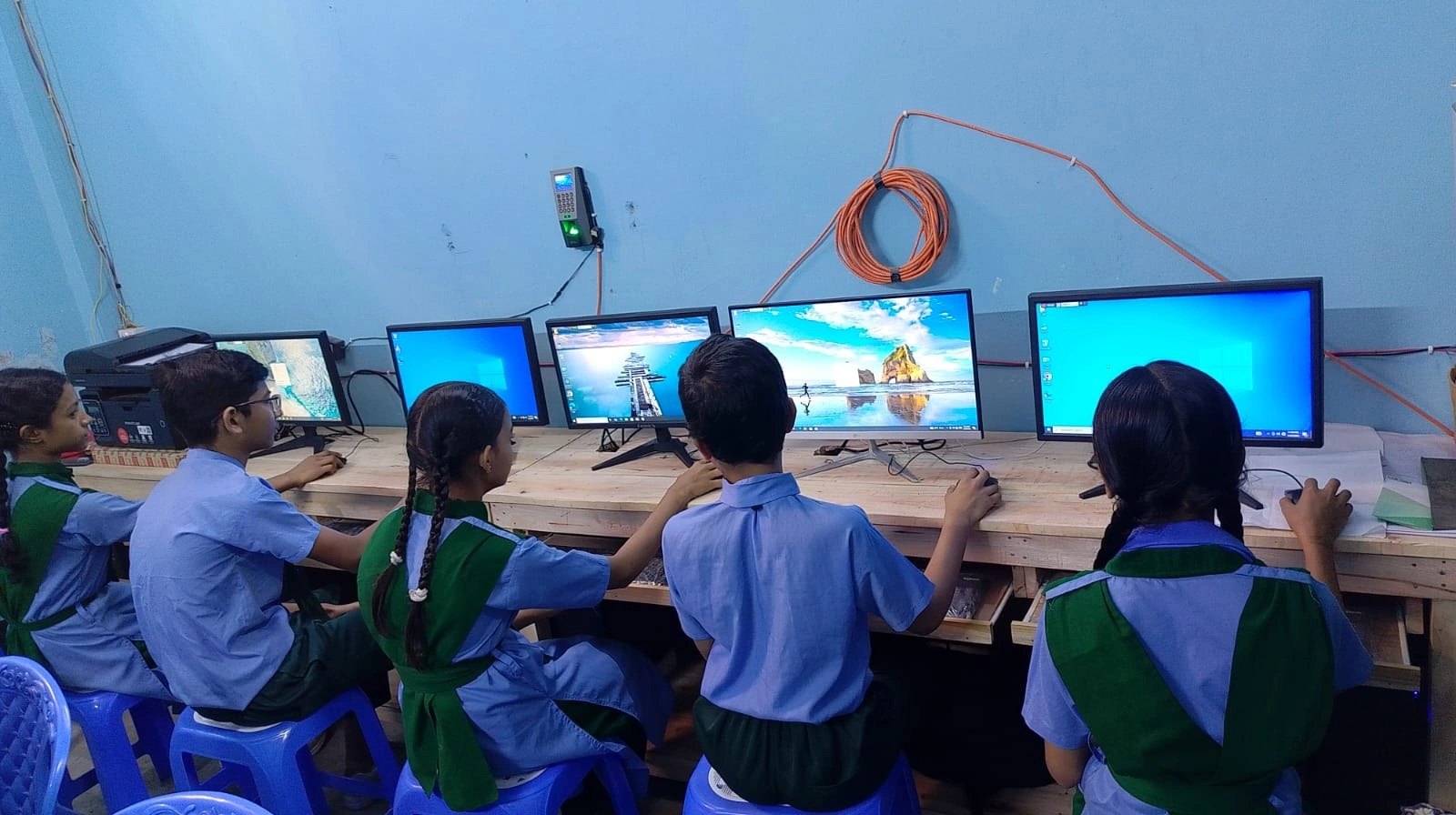
Not everyone has moved. But a defined number of camps can cross the point where leaving becomes self-sustaining.
At a known cost, and a known retention rate. That is what Years 6–15 need Year 5 to prove — and what this coalition can help build.